Friday, August 22, 2014

Wizard Wars: Magic Meets Reality Programming?

It’s a magical summer and the latest TV show to debut is Syfy’s “Wizard Wars.” The reality style program has teams of magicians that are given sets of random objects and then asked to create a routine that employs each of them. The teams compete against each other and the winner of the set then challenges a team of resident wizards with a new set of objects.

A judging panel provides commentary and decides the winner. Lending credibility and recognition to the show are Penn & Teller. Other judges include Christen Gerhart, who is best known for her Theory 11 “Expose” web series, and magician Jason Latimer. The resident wizards include: Gregory Wilson, Angela Funovitz, Justin Flom and Shimshi.

It’s not clear how much time the teams have to create their routines. Also, it’s not clear how much help they receive. I noticed in the credits that there are magic consultants that include: Johnny Thompson, Don Wayne and Dan White. 

Random Objects
It’s a great idea to have magicians compete with random sets of objects. In the first episode, the objects include Spam (the meat-like product, not junk email), a mannequin, water pistols, playing cards (really? I’d be surprised if magicians didn’t break out playing cards), chalk boards, glasses, and more. 


It’s a formula that has long worked on reality shows such as “Hell’s Kitchen” and “Iron Chef,” where aspiring chefs are offered random foods and asked to create a dish in a limited time.

Predictions and Existing Routines
As I expected, predictions are the “go to” effect as magicians can take any object and make a prediction come from or through it. Predictions are the easy route but there are lots of other magic effects to perform (levitation, destruction and restoration, escape...etc). But I understand given the time constraints.  


Furthermore, I think that the magicians may be simply adapting their existing routines. For example, resident wizard Gregory Wilson practically performs his pick-pocket act in his challenge round with Justin Flom against the contestants. The routine, the moves, the jokes are all things he has performed thousands of times.

Sure, one can say that the performers are playing to their skills, as is the case with the chefs in “Hell’s Kitchen” and “Iron Chef.” But when experienced magicians simply adapt their own routines to the props at hand, is this truly “thinking outside of the box?” 

TV Magic Wars
Wizard Wars is pleasant and fairly entertaining. It’s stronger than CW’s “Masters of Illusion” which doesn’t allow for any personality on the part of the performers. But for my money, Penn & Teller: Fool Us is the best of the bunch as we get to experience the polished routines of accomplished magicians. Consider the breakout performances one can enjoy on that show that includes Piff the Magic Dragon, John Archer and more. 


Personally, I prefer to watch magic that has been practiced, polished and perfected. Not cobbled together under pressure. Will "Wizard Wars" be good for magic? We'll see.

More Reading: 
Three Magic Shows to See in Las Vegas: Copperfield, Mac King, Penn and Teller
"Penn and Teller: Fool Us" Frustrating to Non ... - Magic & Illusion

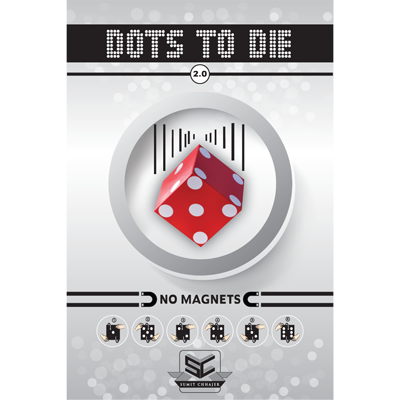
Review of Dots to Die 2.0 by Sumit Chhajer


Here’s a great, visual trick for stand-up and stage that has lots of potential. 

Multiplying 
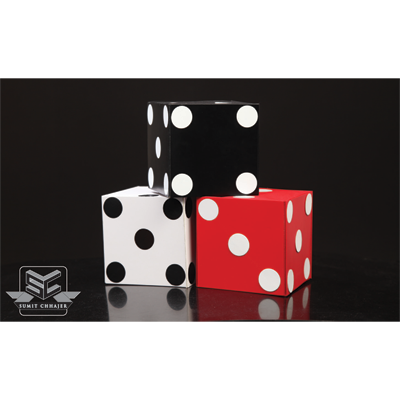
You bring out a square almost six-inches on each side. You show one dot on one side, turn it over and show five dots on the other side. When you turn back to the first side, it’s showing two dots, and the second side shows four. 

You keep turning the square over to show three dots on the side that formerly had one, and then six dots on the side that formerly showed four. The numbers keep changing. For the grand finale, you toss the square into the air and it turns into a jumbo die. 

The beginning part has some relation to the dot trick that's taught on this site here.  

On the Dots 
The prop looks and works great. Most of you are probably familiar with the “What’s Next?” stage effect where dots multiply in various ways. "Dots to Die" is similar in feel but with a different finale. If you’re familiar with “What’s Next?” you’ll like the method employed by Dots to Die. Let’s just say that this one can be performed without looking away from the audience and no adjustments are necessary.


This one is easy to learn and perform. Angle-wise, you'll need your audience in front of you but this is not an issue with most stand-up situations. 

Props 
The prop looks to be well made but I have to wonder if breakage will be a problem in the long run. With similar props that I know of, breakage is an issue. 

There are extra materials provided to fix the prop, but these will only address the aspect of converting the square into a cube. The product even comes with its own carrying case which will help to keep it in working order.


Dots To Die For 
Reasonably priced, "Dots to Die" is a great effect that offers lots of opportunity for themes and presentations. I like this one.

More Reading: 
Review of Oscar Munoz Live
 

Wednesday, August 20, 2014

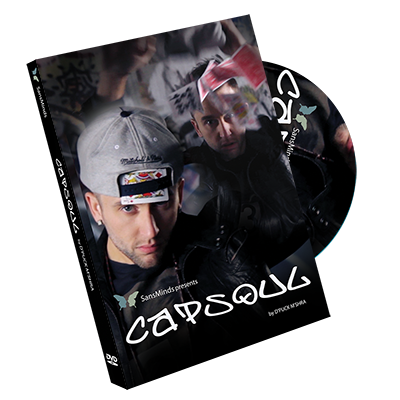
Review of Capsoul by Deepak Mishra and SansMinds Magic

Have you ever wanted to make a card appear from the rim of your baseball cap? This is the premise behind Deepak Mishra’s “Capsoul.” Using the technique taught on this DVD, you can easily alter a ball cap to visually produce a playing card on your hat, or change one card to another.


Read the entire review here. 

More Reading:

Saturday, August 16, 2014

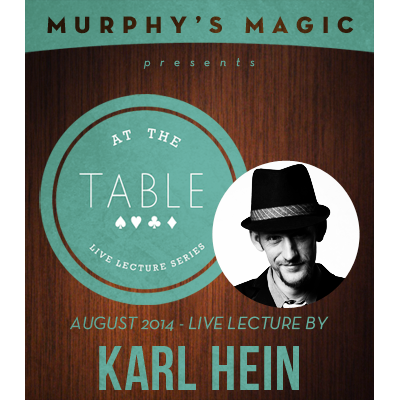
Review of At the Table Live Lecture - Karl Hein


Murphy’s magic now offers its “At the Table Live Lecture” series that features talks and demonstrations from well known magicians. I’ve been perusing these lectures that begin as live, scheduled, online events and then are made available to own and watch via a download or DVD.

I have found all of the lectures to be professionally shot and edited and well done. But for me, Karl Hein’s outstanding lecture on mostly card magic particularly stood out.

A Miracle
That Would Be A Freaking Miracle offers Hein’s multiple card selection routine. Here, three cards are selected by spectators and lost in the deck and then revealed in surprising ways. At the end, there’s a significant kicker in that the entire deck is shown to consist of jokers.

I like the simple, but very practical manner that Hein teaches to have the cards selected and controlled. The selection technique is particular suitable for restaurant/table situations. 

He also teaches a relatively easy and visual color change. If you like, you can reveal the cards from a baseball cap with a technique that Hein calls Hat Trick.

Triumph
The second routine that caught my eye was his Transformer Triumph. This is an in-the-hands triumph routine that does not require the use of a table. As part of the routine, Hein teaches his amazing Heinstein Shuffle, a false shuffle that maintains the entire deck and looks and sounds like a riffle shuffle with a bridge.
You can learn the Heinstein Shuffle to perform Hein’s routine, but it’s a technique that you can use in all of your card magic.

While I can’t imagine enjoying yet one more version of Paul Curry’s “Out of This World,” I thought that Hein’s Out of Your Mind was worthy. This is a version that can be performed impromptu with a shuffled deck, and Hein adds improvements that streamline and simplify the routine and plot and still creates the well-known, stunning ending.

Hein also offers useful advice for working restaurants.

Bringing it to the Table
Hein’s lecture teaches some great tricks and techniques – a crucial balance that makes his “At the Table Live Lecture” one to watch and learn from. This one is truly good. 


Wednesday, August 13, 2014

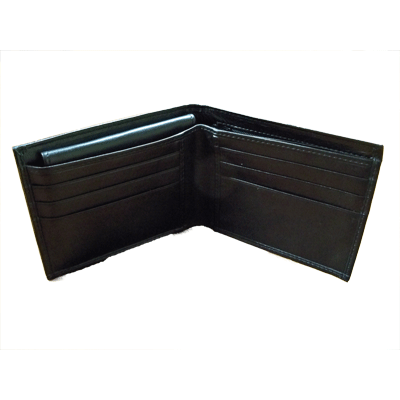
Review of The Undercover Wallet (DVD and Wallet) by Andy Nicholls and Titana


This wallet offers a great means to load a signed playing card into a zippered wallet that doesn’t require palming, and comes with built-in “peeking” capabilities that let you view a playing card or a spectator’s drawing on a business card.
And best of all, it looks like a normal, leather wallet that a man would carry around in his back or front pocket. 

You can read my entire review here:

More Reading:  

Sunday, August 10, 2014

This Week in Magic - August 11, 2014


The biggest news in the past few weeks is the amount of magic that is airing on television. 

America’s Got Talent
It’s summer and although I’ve found little time to watch TV, I know that “America’s Got Talent” is running. You see, at my weekly restaurant magic gigs, my “regulars” are constantly asking me about the magicians and illusions featured on the show. 

Several magicians featured this season include: Mike Super, Smoothini, and Mat Franco.  What’s most notable is that much of the magic is close-up. The magicians walk right up to the judges and perform much as one might when table-hopping. 

This is such a change from several years back when the magic category was something of an arms race with the bigger the illusion, the better. This culminated with Murray Sawchuck vanishing a massive train on stage. 

It’s great to see close-up magic being showcased, but the celebrity judges are beginning to question whether the routines can play at Radio City Music Hall during the next level. You can watch recent performances by Mat Franco here and here, Mike Super here and Smoothini here.

Penn & Teller Fool Us
In the States, the UK program “Penn & Teller Fool Us” is currently airing on the CW Network. The show is immensely entertaining and features excellent magic performances.  You can watch the show online here.

Masters of Illusion
Also on the CW this summer is the latest season of the “Masters of Illusion” magic variety show. While I normally welcome any positive presentations of magic on television, I’ve soured on this show since its last iteration. And I don’t see much improvement with the current season. 

This season, gone are the close-up street segments and in the first two episodes, the emphasis is on big stage illusions. The problem is, many of the illusions have been performed in earlier seasons by other artists. Also, many of the illusions and even the magicians have been seen on “America’s Got Talent” in recent seasons.

This biggest problem, however, is that the show offers little means for a performer to establish character and personality. There’s a short introduction by the host, the illusion is quickly and efficiently performed, and during the bow, there’s a virtual, on-screen explosion/transition, and the show moves on. I challenge viewers to recall the name of a single performer. “Masters of Illusion” can learn from the short introductory segments shown on “America’s Got Talent” and “Penn & Teller Fool Us.”

Illusions are great. But in magic entertainment, personality is everything.  You can watch the show online here.

Magic Reviews
I reviewed three products this week. Infamous, by Daniel Meadows and James Anthony, is an excellent mentalism routine that employs an intriguing Stroop test which is combined with a powerful book test. I really like this one and you can read my review here. 

If you like to levitate objects in close-up situations, you’ll enjoy the Defiance system by Mariano Goni. It’s not impromptu, but you’ll learn some excellent techniques. You can read my review here.

Finally, there’s the self-capping marker of Frea-capped by Kieron Johnson. The problem is, to perform the trick you have to stick the gimmicked Sharpie marker into your mouth and turn away momentarily from your audience. I think that there are well known sleight of hand bits that will get reactions just as strong or stronger. I recommend that you pass on this one. You can read my review here. 

More Reading: 

Friday, August 8, 2014

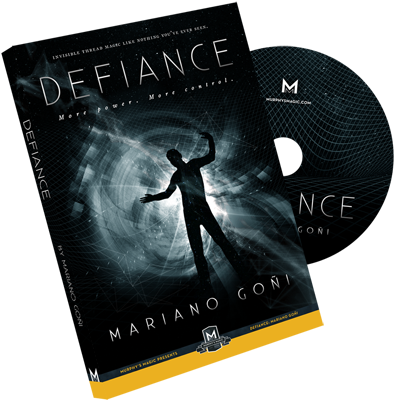
Review of Defiance (DVD with Gimmick) - Mariano Goni

Floating an object in midair is perhaps one of the most stunning things a magician can perform. While I’ve seen some great close-up illusions in this regard, Defiance offers some amazing effects. It’s not for table hoppers – unless you’re willing to put up with a lot of inconvenience and pre-setup – but Mariano Goni has created an excellent system and some clever, visual floating illusions.  

Spin and Float
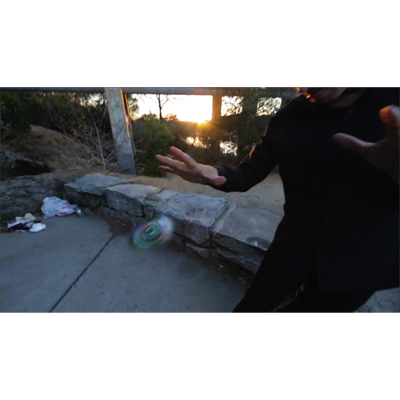
With the aptly named The Incredible Spinning Card, you throw a borrowed credit card several feet away and it hovers –still spinning - in midair a few feet in front of you.  And this is without you being any where near it. On your command, the card returns to you. If you like, there’s a version with a hoop that you can pass over the spinning card.

The setup is involved and the kit comes with a quality device (it’s "reel" nice) and some material to make the illusions happen. I like the open nature of the device that makes it easy to change out material when it inevitably breaks. Also, it’s easy to adjust the tension to your liking. 

The main setup has to be done ahead of time. Goni teaches you how to setup on the fly in front of spectators, but even in this case, you’ll need to scope out the room and pre-plan the enterprise.

Got Change?
There’s a stunning in-air change. You crumple a piece of paper into a ball and it begins to levitate. You pull out a lighter and set the paper on fire, and it turns into a floating (crumpled) dollar bill. And yes, you can perform the classic “floating bill” as well. The bill floats from hand to hand and Goni teaches a way to borrow a bracelet and pass it over the bill. It’s brilliant handling.

Unrelated to the device that’s provided with the kit, there’s a floating cigarette effect that is quite impressive. You cause a cigarette to float in mid air and can borrow a finger ring and use it as a hoop to pass over it. This one requires additional materials that you’ll need to purchase from a craft store. It looks great and magicians will love this one.

The System
Defiance offers a fantastic system for floating objects. It’s not practical for strolling or walk around, but if you have situations such as a formal close-up or intimate stand-up shows, or any where you can check out a room and setup ahead of time, and are willing to put in the work, you’ll probably enjoy Defiance. And even if you don’t use the system, you’ll appreciate the tremendous secrets and brilliant adaptions found within.